Tying [someone] with disabilities
![Tying [someone] with disabilities](/content/images/size/w1200/2024/09/re-edit-1.jpg)
Many years ago I attended a very small rope roundtable hosted at a cute little coffee shop by someone who was very involved in the national con rope scene but relatively new to the local scene. While the roundtable was intended for bottoms I had messaged them ahead of time asking if I could attend and promising to keep myself in the background. During those couple of hours that the small group of us talked, the host said several things that have stuck with me to this day. The first was that even though I exclusively topped for rope I did still bottom for other things, and so I had bottom perspective and it was okay for me to speak on that in this space. I was, and still am, incredibly grateful for that. The second was that, and I'm paraphrasing here, "everything else about your rope can be shit as long as your uplines are perfect." The third is the thread I want to follow today.
I was talking about things Nea and I have done to modify rope because of their disabilities and the host told me something along the lines of, "That will make you a better rope top. If you only tied with people that can do everything you wouldn't have to learn the rope anywhere near as well." Again, that's paraphrasing, but the sentiment stuck with me.
When I met Nea they had already been through one knee surgery. For the first year of so of us tying together they didn't yet have a diagnosis for their blood sugar disorder and half or more of our scenes ended with me pulling them down quickly as their blood sugar started plummeting. I kept glucose tablets in my rope bag and that was the first thing I would give Nea when they hit ground even if their blood sugar didn't crash mid scene. To this day, one of the things I value in an upline is the speed at which I can get it down.
When we started tying we just avoided TK's outright because of past issues Nea had with them. In fact, the first class we ever taught was called 'Fuck TKs' and it was about alternative chest harness options in a time where most places were teaching TK or bust. Before our first rope con we worked really hard on labbing a TK that would work for us because I was worried about instructors requiring one. In that process we discovered that the nerve on one side of their arms was lower than the other and as such developed an asymmetrical TK with the help of Em and Virgil. Later we would determine that it was actually all the nerves on the right side of their body. One of Nea's first tattoos was used to mark the nerve on the right side. I still don't tie TKs very often and the few times I have tied them on other people I have insisted on finding where the nerve is exposed as part of the process of tying it.
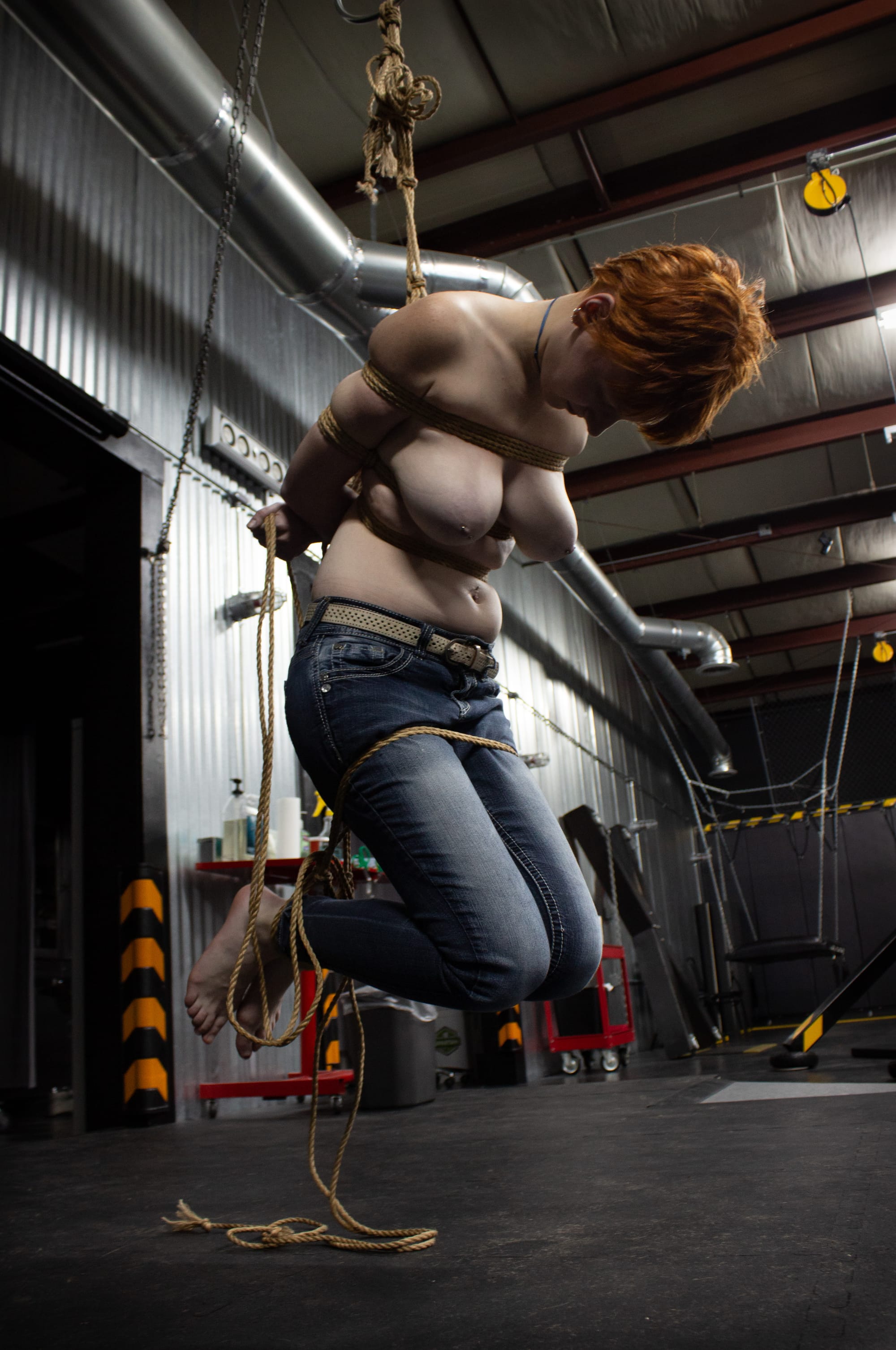
After their second knee surgery Nea expressed the fear that they weren't "as good a rope bottom" anymore (whatever that even means). I told them it doesn't matter. The end goal for me isn't the extreme look of rope but rather the emotions it lets us explore and the experience of doing it. I want to make the rope hurt and if their body can't do as extreme a back bend that just means I don't have to pick them up as far to get what I want.
Just a couple weeks ago Nea and I were talking about how to deal with a chronic injury they have on their ribs and they told me they think eventually they might just not be able to do check harnesses anymore. I'm convinced we can find a way to tie a chest harness that doesn't hit the injured part and since then I have had at least a little bit of my brain thinking about that non stop. I must keep in mind the lesson we learned from the futo though, and make sure there is variety. (I'll expound on that in another post sometime.) I know that as we explore this it will change how I tie harnesses on other people. I don't know yet how it will change, but I'm very sure it will.
I have a pinned story on my Instagram called 'modifying rope' and I recently expressed to Nea my not wanting to use the word modifying for it. I didn't think that the rope we're doing should be considered significantly different from the 'normal' way of doing things. They pointed out that even though rope works best when it is tied for the body it is going on vs generically it is still modifying it to work with their body. They reminded me that they are disabled and it is an integral part of how we do rope.
That's the thing, right, when I'm tying with Nea, I'm not tying around their disability but rather with it. While I don't view it as an obstacle to be overcome it is still an active part of the dialog Nea and I have when we do rope. Everything from my uplines to how I build harnesses to checking if people have carpel tunnel is direct result of tying with Nea and their disabilities. I honestly don't think I could disentangle my rope from them, and consequently from their disabilities, if I tried.